Anthony Lucero’s award-winning film Paperbag Plan, recognised at ROLA 2026, begins with a question that many families caring for a disabled loved one will recognise: what happens when the person who has always been there to care for them no longer can?
The feature film follows a father who has cancer and a disabled son who has never had his first job. Faced with his own mortality, the father begins teaching his son how to bag groceries at the local supermarket, hoping to give him greater independence and prepare him for a future in which he may have to navigate the world without him.
For Anthony, the story comes from somewhere deeply personal. His brother Eddie was physically and mentally disabled, and throughout his life was cared for by their mother. “My mom did everything for him. She would lift him out of his bed into the wheelchair… And it was that relationship, decades long, of my mother and my brother just watching them interact.” What Anthony remembers most clearly is the love between them. Eddie repeatedly outlived early expectations for his life, something Anthony attributes to the extraordinary care his mother gave him. That relationship became the emotional foundation of Paperbag Plan.
Telling a Story You Know
Although Paperbag Plan is fictional, Anthony believes its sense of authenticity comes from lived experience. “This film, it’s a lived experience. And I’m pulling from that for this film because I have a lot of people say that the film feels authentic.” The father and son on screen are actors, yet the emotional reality behind their relationship is something Anthony had witnessed throughout his life.
For filmmakers approaching experiences outside their own, he believes research and proximity matter. That means spending time with disabled people, speaking to carers and listening to those who understand the reality being portrayed. The principle extends beyond accurate representation. It is about recognising that the people whose lives inform a story should be part of the conversation around how that story is told.
Beyond Stories About Disability
Anthony hopes Paperbag Plan encourages audiences to think differently about disability beyond the cinema too. Employment is one area in which he would particularly like to see change. “I would love people to hire people with disabilities… It’s hard enough for anybody to get a job. And then you add the layer of a disability on top of it.” Work, he points out, is about more than income. It can bring independence, participation and a sense of pride. Yet employers may hesitate to give disabled people opportunities because of assumptions about what they will or will not be able to do.
Anthony sees the same issue within his own industry. He wants to see more disabled people working both in front of and behind the camera, and more characters played by disabled actors without disability necessarily becoming the subject of the story. “The story doesn’t have to focus on their disability. It’s like just take John in the screenplay and just hire an actor with a disability to play that person.” For Anthony, greater visibility can gradually change what audiences perceive as ordinary. “The more we do it, the more we normalise it.”
Finding a Way to Make the Film
The ambitions behind Paperbag Plan were substantial. The resources available to make it were not. Anthony and his wife, K.L. Lohi, financed the film themselves. Production had to be structured around what they could afford, sometimes filming for two weeks, stopping for a month and returning for a weekend when circumstances allowed.
Locations changed. Anthony’s own home became part of the production. Ideas written into the screenplay had to be reconsidered once the realities of producing them became clear. “There’s the film that you write and there’s the film that you make. And those are two often very different things.”
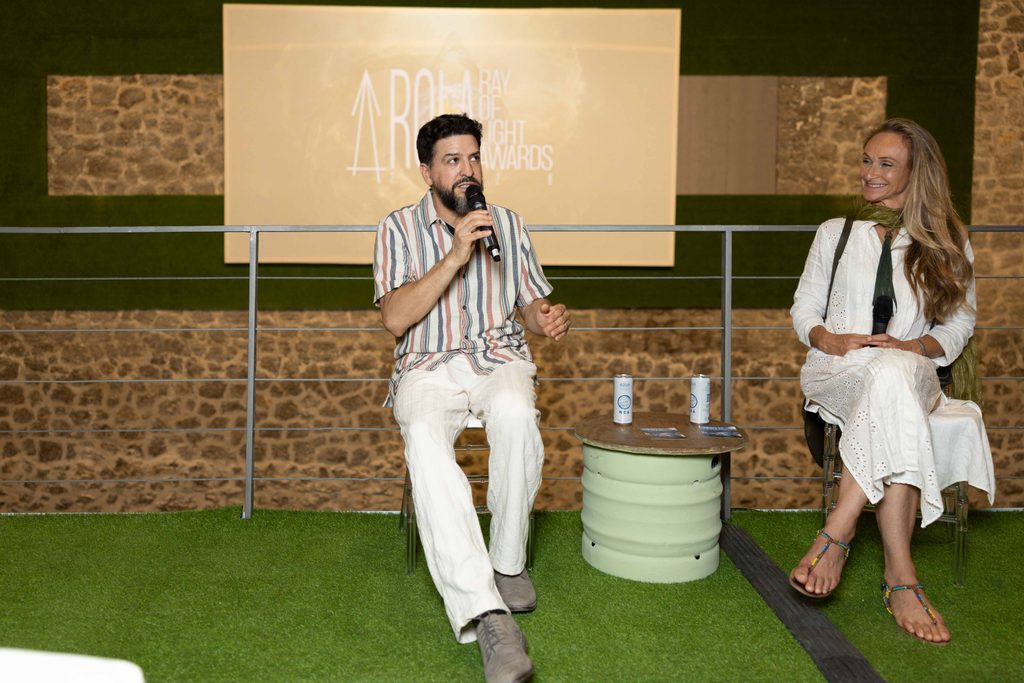
For Anthony, this is simply part of independent filmmaking. Financial limitations may alter how a story reaches the screen, but he does not believe they should automatically prevent someone from beginning. “You have to find a way to do it.” Technology has made the basic tools of filmmaking considerably more accessible. What matters, he argues, is looking honestly at the resources already available and creating within them. Sometimes that means changing a location, simplifying an idea or sacrificing something imagined on the page in order to protect the film as a whole.
Finding Your Own Voice
Anthony’s route into filmmaking began long before he attempted to direct a feature. Cinema was something he shared with his father. They watched films together constantly, and after Star Wars, Anthony became fascinated by behind-the-scenes footage showing how those imaginary worlds were actually constructed.
As a child, seeing technicians working on the Millennium Falcon transformed filmmaking into something tangible. “It looks like a job… that looks like a job that I could do.” Eventually, he did. Anthony went on to work at Industrial Light & Magic, the company he had watched creating Star Wars, before beginning to make films of his own. His advice to people who want to tell stories but lack experience is rooted in that same practical instinct: start making them. “You just have to make short films. You just have to do it.”
He also cautions against becoming so influenced by established filmmakers that there is no room to discover an individual voice. Mistakes, from poor sound to an out-of-focus image, are part of learning the craft. “You’re going to make a mistake… But that’s how you learn how to make it better and better and better.” The objective is not to begin perfectly. It is to begin, keep making things and allow a voice to emerge through the process.
The Value of Long-Form Storytelling
Anthony is equally clear about the kind of filmmaker he wants to remain. At a time when much of what we watch is increasingly compressed into seconds of content, he still believes deeply in the experience of feature-length cinema. “There’s always going to be a need for long format. There’s always going to be a need for people to sit in a theatre with other people in a dark room and watch a two-hour film.”
For a story like Paperbag Plan, that time matters. Its themes of disability, family, mortality, independence and care require room for characters to become people rather than representations of an issue. Anthony hopes that experience ultimately leaves audiences feeling inspired. He knows the premise can initially sound difficult or sad, but that was never the film he wanted to make. “I want people to feel inspired.”
His previous film had shown him that a story could genuinely affect the way somebody saw their own life. Audience members repeatedly told him they had been changed by what they watched, and he carried that experience into Paperbag Plan.
An Award Shared
By the end of ROLA 2026, Paperbag Plan had received an award. For a film Anthony and his wife had fought simply to finish, the moment carried particular weight. “I never thought I’d be here. I never thought I’d be able to make a film. And now I’ve done two features.” Anthony describes himself as his own worst critic. Even while making the film, he began from the assumption that it might fail creatively and worked at it piece by piece until he felt he had made it better. Receiving recognition at ROLA gave him a rare opportunity to acknowledge what he and the people around him had achieved.
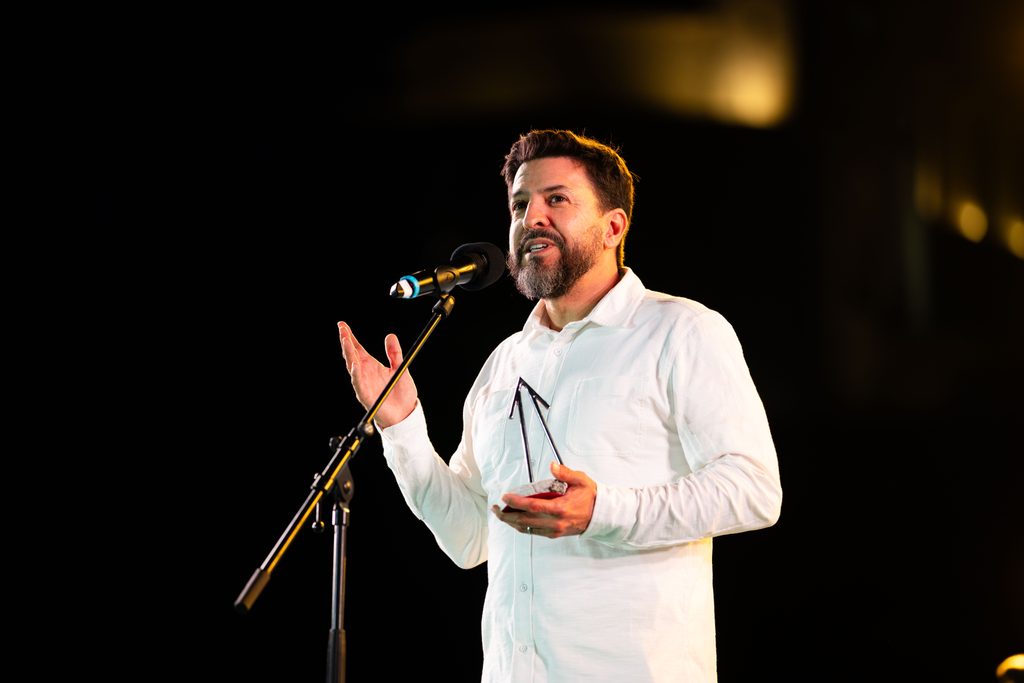
Central among them was his wife, who helped finance and edit the film and remained beside him through the isolation of post-production. “She was my rock.” After filming ended, Anthony describes the project as essentially becoming a two-person operation. The award therefore belonged to her too, as well as to those who had advocated for the film and helped bring it to ROLA.
Independent filmmaking can involve years of uncertainty for a story that eventually appears complete on screen. Paperbag Plan emerged from that process with something Anthony had been seeking from the beginning: a film rooted in a relationship he had witnessed firsthand, capable of reaching beyond his own family and asking audiences to see possibility where society too often sees limitation.