What makes a good father?
For psychotherapist Michał Jasiński, the question does not have a single answer. His work brings him into contact with fathers and sons from different countries, cultures and family structures, each carrying their own understanding of what fatherhood is supposed to mean.
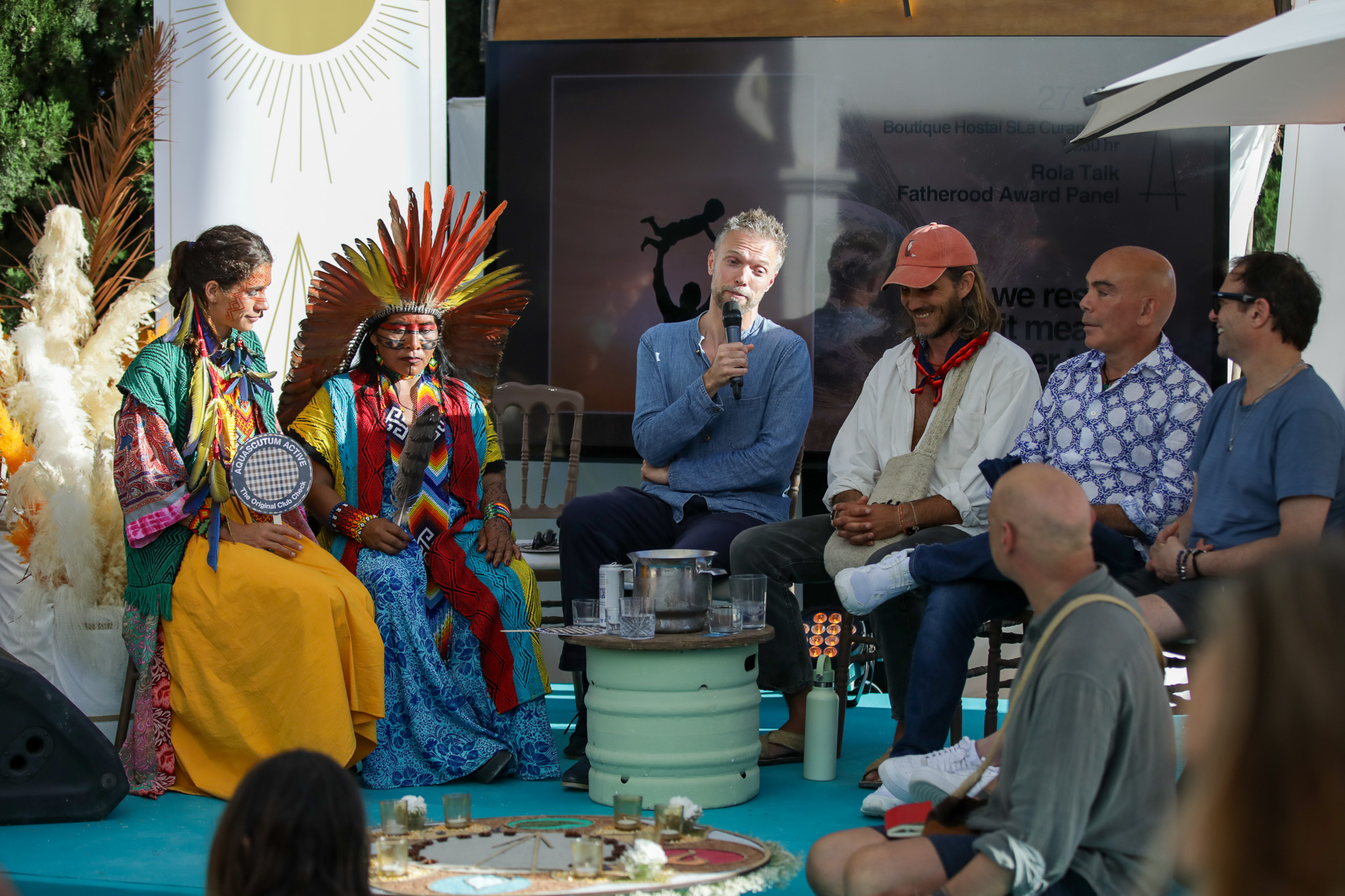
Invited to ROLA 2026 for the festival’s Fatherhood panel, Michał approached the subject from this therapeutic perspective. He is not a father himself, but much of his professional work involves the relationships between parents and children, the emotional patterns formed within families and the ways those patterns can continue shaping our lives long after childhood.
“My view on fatherhood is quite complex. I would say fluid, because the reality of fatherhood is the one that we construct over and over, reconstruct over and over again.”
Rather than searching for an ideal model, Michał is interested in something more human: whether fathers can be present, emotionally available and humble enough to recognise when something has gone wrong, and then try to repair it.
The Emotional Patterns We Inherit
Much of Michał’s work is concerned with what he describes as emotional learnings: understandings about ourselves, relationships and the world that are formed through our earliest experiences.
As children, we learn what appears necessary to maintain connection, receive love or feel safe. Those responses can be remarkably intelligent adaptations to the circumstances in which they develop. “They were wonderful, brilliant adaptations to survive in our families of origin.” The difficulty comes when a strategy that was useful in childhood continues operating in adult life, where it may contribute to suffering. Michał points to patterns including perfectionism, workaholism, depression and anxiety as examples of symptoms that can have a deeper emotional logic behind them.
His therapeutic approach is therefore less interested in condemning the symptom than understanding why it became necessary in the first place. “We shouldn’t blame the fathers or blame ourselves, we should dig deeper.” Fatherhood matters within this process because children learn through what they experience. The ways their parents respond to sadness, anger, vulnerability, conflict and affection can become part of their own internal understanding of how relationships work.
Making Space for Vulnerability
Despite greater awareness around mental health, Michał believes certain expectations surrounding masculinity remain remarkably persistent. “The father shouldn’t be powerless, the father shouldn’t be helpless or vulnerable.” For men who have learned that difficult emotions should remain hidden, work can become one socially acceptable place to escape into. Michał also points to alcohol, drugs, sex and romantic relationships as other ways some men may avoid confronting feelings of helplessness or emotional pain. The result can be suffering that remains largely invisible.
His concern is that our cultural idea of strength can sometimes make it harder for men to acknowledge when they are struggling and to ask for support. Creating healthier models of fatherhood therefore requires allowing a much broader emotional range, including the experiences traditionally treated as incompatible with masculinity. A father can be uncertain. He can make mistakes. He can be sad. He can need help. For Michał, acknowledging these experiences does not diminish fatherhood. It makes a more honest relationship possible.
The Good Enough Father
When asked whether any particular culture had arrived at a healthier model of fatherhood, Michał resisted the idea of identifying one society as having found the answer. Instead, he returned to a concept from psychology.
Donald Winnicott introduced the idea of the “good enough mother”, describing a parent who does not need to achieve perfection, but who is sufficiently present and capable of responding to the needs of the child. Michał suggests extending that principle to fathers. “Let’s think about a good enough father who is maybe especially humble enough to be able to repair.” Mistakes are inevitable. What matters is what happens afterwards.
Michał sees parallels with psychotherapy, where difficult moments can arise between therapist and client. A rupture does not necessarily destroy the relationship. When it can be acknowledged and repaired, something important can happen within the relationship itself. “The repair of the alliance is so important. It is important as well in fatherhood.” This offers a considerably more forgiving model than the pursuit of parental perfection. A healthy father does not need to respond correctly in every moment. He needs the capacity to return, listen, acknowledge what happened and reconnect.
Let Children See the Joy
There is another quality Michał believes deserves more attention: enjoyment. Children are constantly forming ideas about adult life from the people around them. If they experience fatherhood primarily as exhaustion, resentment or obligation, that becomes part of what fatherhood means to them. “If the child, whether it’s a girl or a boy, sees that the father is not enjoying his fatherhood, that it’s like a tough task, he’s always tired, he’s grumpy… then this is the construction of the fatherhood that they will have.” For Michał, fathers need the conditions that allow them to experience genuine pleasure in the role too.
It is an unexpectedly simple point within a conversation that ranges across psychotherapy, trauma and cultural expectations. Children need more than responsible fathers. They also benefit from seeing that being their father can contain affection, playfulness and joy.
Undoing Aloneness
Although the Fatherhood panel focused particularly on the masculine lineage, Michał repeatedly widened the conversation beyond the individual father. Family exists within a larger system. Culture, community and previous generations all contribute to what is passed forward. He is particularly interested in the role of collective support. In more individualistic cultures, parenthood can become an intensely private responsibility, while cultures organised around extended families and community may offer children access to multiple caring adults and parents a wider structure of support.
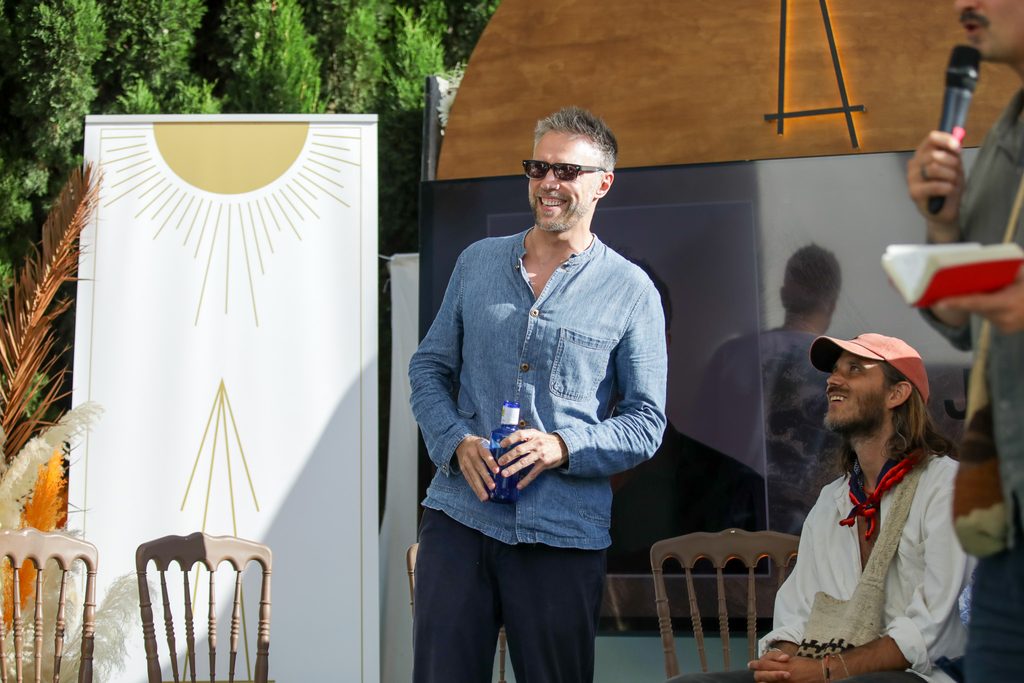
Later in the conversation, Michał describes an idea from psychotherapy that captures something important about this: “undoing aloneness”. Trauma, he explains, often carries a profound sense of isolation. Reconnecting with other people, community, spirituality or what he calls the “tribe” can therefore become part of healing. “One big thing when it comes to healing is this undoing aloneness.”
The idea also speaks naturally to ROLA’s emphasis on intergenerational exchange. What passes between generations is not limited to trauma. Knowledge, culture, care and wisdom travel too.
Stories That Make the Invisible Visible
During the interview, Michał returns to one film that has stayed with him particularly strongly: Charlotte Wells’ Aftersun. For him, its importance lies partly in its depiction of a father whose depression is not immediately obvious. He can be loving, engaged and playful with his daughter while simultaneously experiencing profound internal distress. Michał sees this as a powerful representation of what he describes as “silent male depression”, precisely because it resists the assumption that somebody experiencing depression will always visibly appear sad or withdrawn.
It also demonstrates why storytelling matters within conversations such as the one ROLA created around fatherhood. Film can make an internal experience visible without reducing its complexity. It allows us to inhabit another person’s reality for a time and perhaps recognise something we had previously failed to see.
A Fatherhood That Can Change
Perhaps the most hopeful idea running through Michał’s conversation is that what we inherit does not have to determine what we pass on. Our ideas about fathers are constructed through families, societies and generations. They can therefore be reconsidered. Greater openness towards psychotherapy, men’s circles and other forms of support means Michał is already seeing people begin this process earlier in life. It creates the possibility of recognising old emotional patterns before they are repeated automatically in another generation.
Fatherhood can then become something more spacious: a relationship in which strength can coexist with vulnerability, mistakes can be followed by repair and children can see that care does not have to come at the expense of joy. There may never be a perfect father. For Michał, perhaps a good enough one is a far more meaningful place to begin.