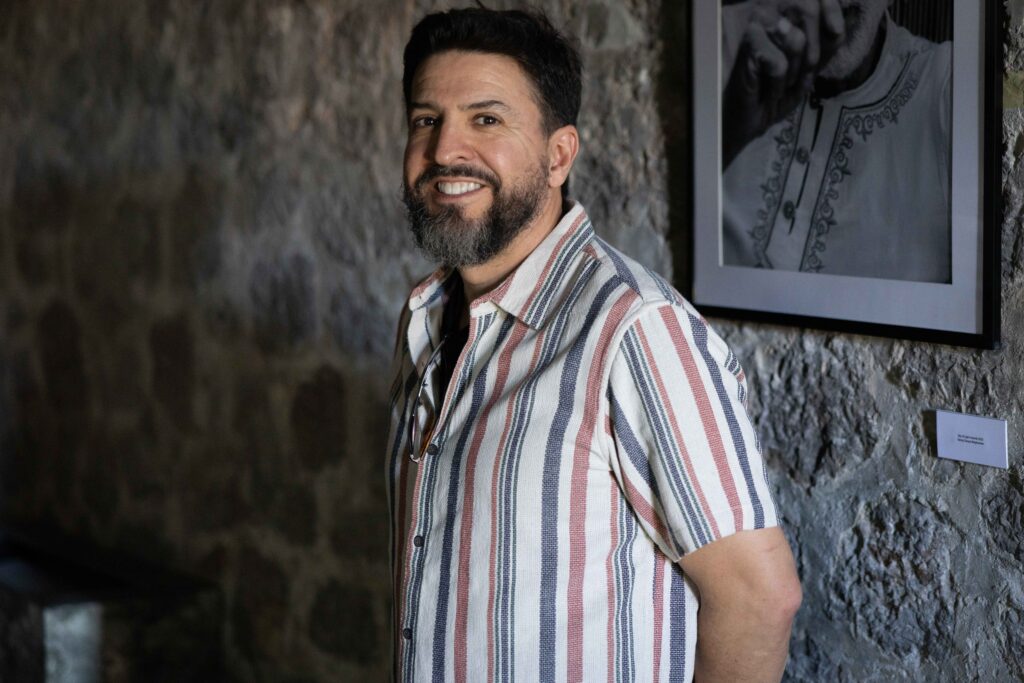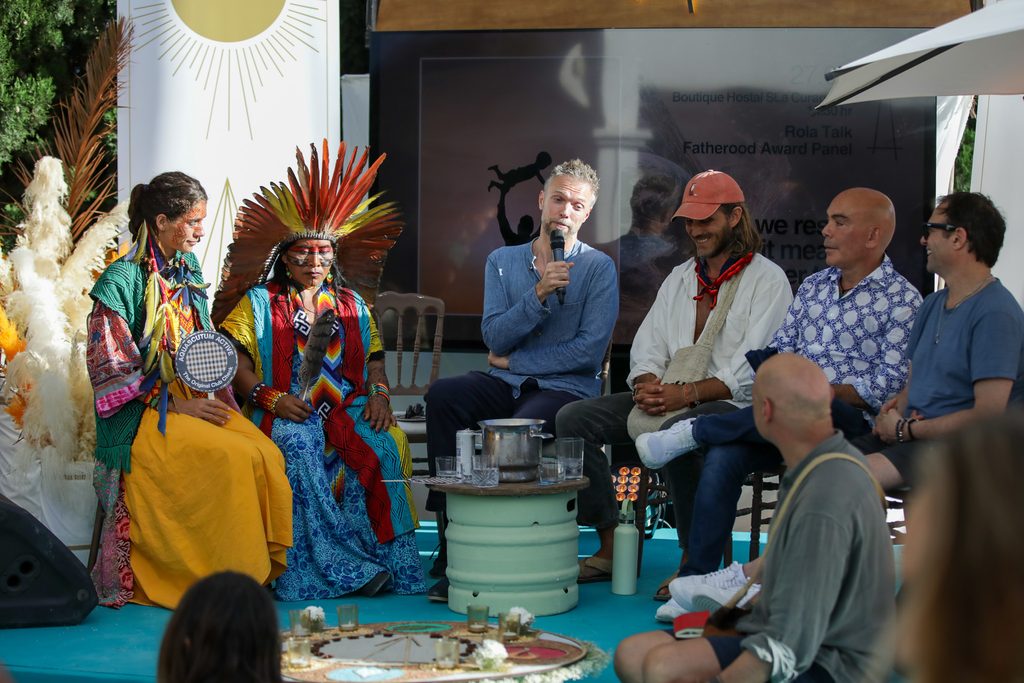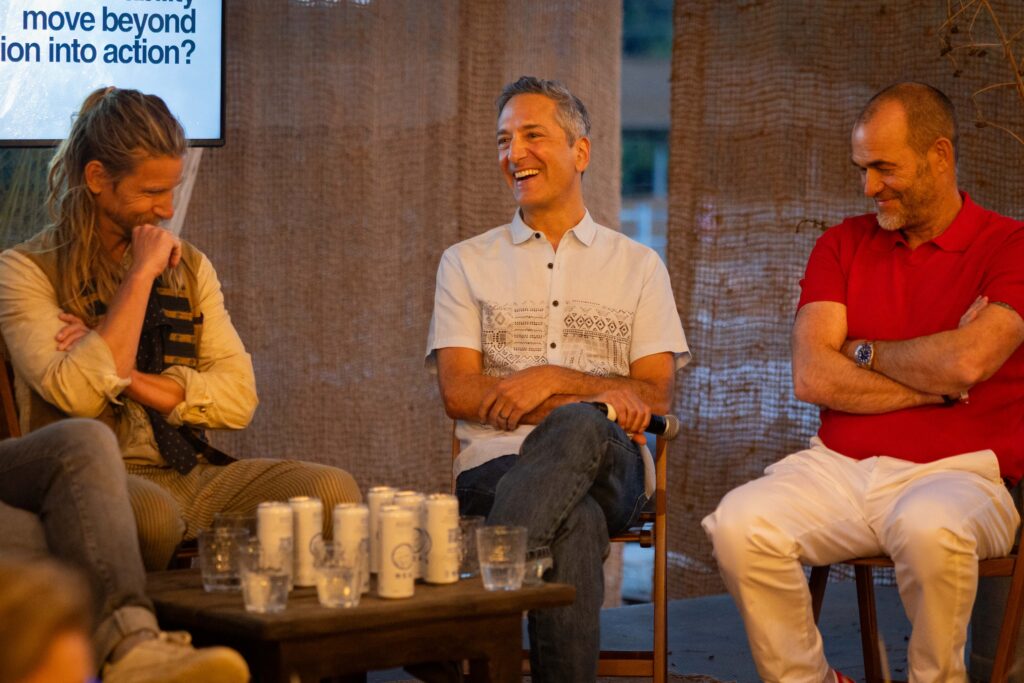
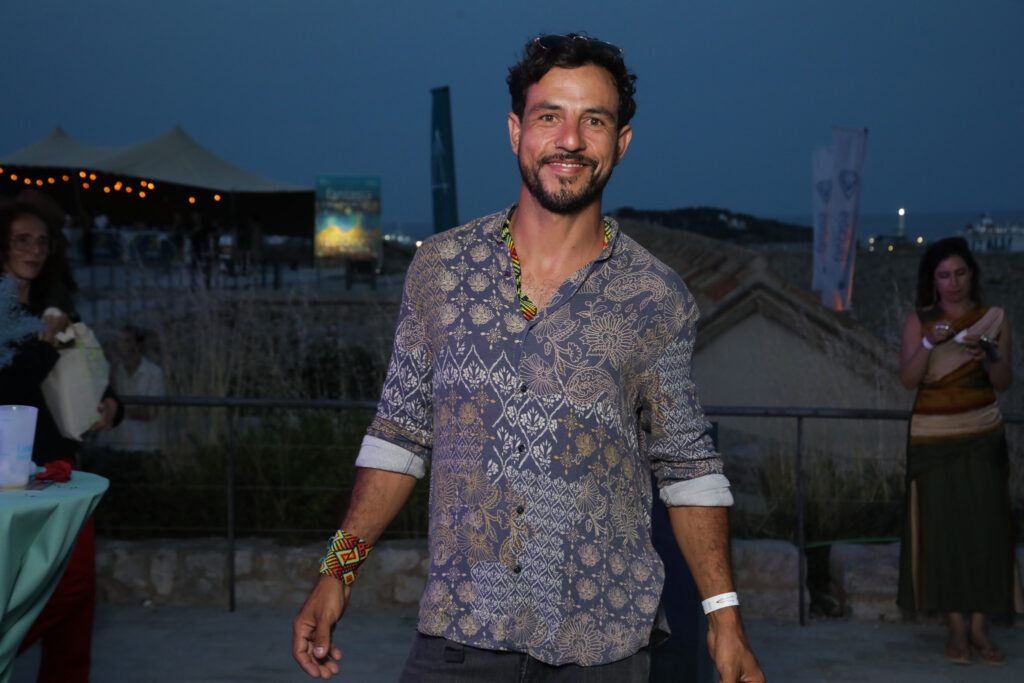
For Jorge Pineda Bruges, creativity is one of the most important tools we have for addressing the environmental challenges facing our planet. As an artist and president of the Ibiza-based environmental organisation Creatives for the Planet, his work brings together ecological action, cultural preservation and the belief that meaningful change begins when people reconsider their relationship with the natural world.
At ROLA 2026, Creatives for the Planet received the Ibiza Award, recognising the organisation’s contribution to environmental awareness, sustainability and the protection of the island’s cultural and ecological heritage.
Jorge joined the festival with several projects that demonstrated how those ideas can be translated into action. Alongside helping ROLA reduce waste through a reusable cup initiative, the organisation presented work from Tornem a la Terra, a documentary project dedicated to preserving the traditional knowledge of Ibiza’s rural women. For Jorge, both projects belong to the same conversation about the future of the planet and the knowledge we risk losing along the way.
Creativity as a Tool for Change
Creatives for the Planet is an environmental NGO that uses creativity to address ecological and social challenges. Its projects combine artistic expression with education, community participation and practical initiatives designed to reduce environmental harm.
Jorge believes creativity has a much wider application than the arts alone. It can change how people approach problems, encouraging them to question established habits and consider solutions they might otherwise overlook. “Creativity for us is the key of every single solution. Once you start to be creative, you realise that there are thousands of ways to solve a problem.” What concerns him is how rarely people give themselves the time to think differently. In a society increasingly driven by speed, consumption and immediate results, there is little space to consider the longer-term consequences of our decisions. He sees environmental responsibility as something that requires collective participation. The challenges are shared, and so too must be the effort to address them. For Jorge, this begins with recognising a fundamental relationship that modern society has increasingly overlooked. “We’re not separate from nature. We are part of nature.”
Returning to the Land
One of the organisation’s most significant cultural projects is Tornem a la Terra, meaning Return to the Earth. The documentary series preserves the knowledge and practices of Ibiza’s pageses, the rural women whose lives have been shaped by generations of working closely with the land. Through their stories, the project documents traditional crafts, food preparation, agricultural practices and the everyday knowledge that once formed an essential part of life on the island. Jorge believes these women possess an understanding of nature that modern society has gradually lost. “They know another technology, and it’s how earth and the cycle of life work.”
For generations, this knowledge was passed from one person to another through daily experience. People understood the seasons, the plants growing around them and the resources available within their immediate environment. Their relationship with the land was practical, continuous and closely connected to the rhythms of nature.
Jorge is particularly concerned about what happens when the people carrying this knowledge are no longer here to share it. “Once they disappear, their knowledge as well.” Through Tornem a la Terra, Creatives for the Planet is helping preserve these experiences in a digital archive, creating a resource that future generations can return to when learning about the island’s traditions and its relationship with the natural environment.
Learning From the Women of Ibiza
For Jorge, the importance of Tornem a la Terra extends beyond documenting the past. He believes the knowledge held by Ibiza’s older generations has something valuable to offer the present. He describes the pageses as women who understand how to work with nature, recognising its cycles and limitations rather than treating the natural world simply as a resource to be consumed. Their practices offer a perspective on sustainability that existed long before the term became part of contemporary environmental discussions.
Jorge sees a particular responsibility in ensuring that younger generations have access to this understanding. As traditional ways of life disappear, so too does the opportunity to learn directly from the people who practised them. The project therefore becomes a form of intergenerational storytelling, preserving both the practical knowledge and the cultural memory of Ibiza. It also raises a wider question about progress. As society develops new technologies and increasingly sophisticated systems, what knowledge might we be leaving behind that could help us live more responsibly? For Jorge, looking towards the future should also involve understanding what previous generations already knew.
Making Sustainability Practical
Creatives for the Planet’s contribution to ROLA extended beyond the films and conversations taking place during the festival. The organisation also supported waste reduction through its Circular Cup initiative, a reusable cup system designed to reduce the amount of single-use plastic generated at events. The concept is straightforward. Visitors pay a deposit for a reusable cup and receive their money back when they return it. The cups can then be collected and used again, reducing the waste left behind.
For Jorge, initiatives like this demonstrate that environmental responsibility does not always require a complicated solution. Sometimes meaningful change begins by reconsidering something as ordinary as how a drink is served. It is also an example of the relationship between the festival’s values and its practical operation. ROLA’s programme explores ecological awareness and humanity’s relationship with the natural world. By working with Creatives for the Planet, the festival was able to bring those conversations into the experience of attending the event itself.
Recognising an Island-Born Initiative
At the ROLA 2026 Gala in Dalt Vila, Creatives for the Planet received the Ibiza Award, celebrating an organisation whose work is rooted in the island while addressing challenges that extend far beyond it. The recognition reflected the breadth of its activities, from environmental education and waste reduction to preserving traditional knowledge through documentary storytelling.
For Jorge, the connection with ROLA was particularly meaningful because of the shared belief that creativity can help people reconsider how they live. He sees the festival as part of a growing community of people who want to approach the future with greater care for both humanity and the natural world. “It’s so beautiful to connect with people that think as you.” That sense of collective purpose is central to his outlook. Environmental challenges can feel overwhelming when considered individually, but creativity and collaboration create opportunities for people to act together.
A Different Way of Thinking About the Future
Throughout his conversation at ROLA, Jorge returned to the importance of considering the consequences of our actions. He believes environmental responsibility should be part of the earliest decisions behind any new project, including the questions we ask about the resources it requires and the impact it may have. It is an approach that connects the practical work of Creatives for the Planet with the traditional wisdom preserved through Tornem a la Terra. Both encourage a more thoughtful relationship with the world around us, one in which creativity, responsibility and respect for nature inform the choices we make. Through its work in Ibiza, Creatives for the Planet is demonstrating how those principles can take many forms: a documentary preserving the memories of rural women, an artwork created from discarded materials, an educational initiative or a reusable cup that prevents unnecessary waste.
The Ibiza Award recognises the organisation’s contribution to that wider effort, and the potential for island-born ideas to inspire change elsewhere. For Jorge, the starting point remains creativity itself, and the belief that when people make time to think differently, they begin to discover new ways of caring for the world they share.. it is about ensuring that the stories capable of reaching people are given the opportunity to do exactly that.