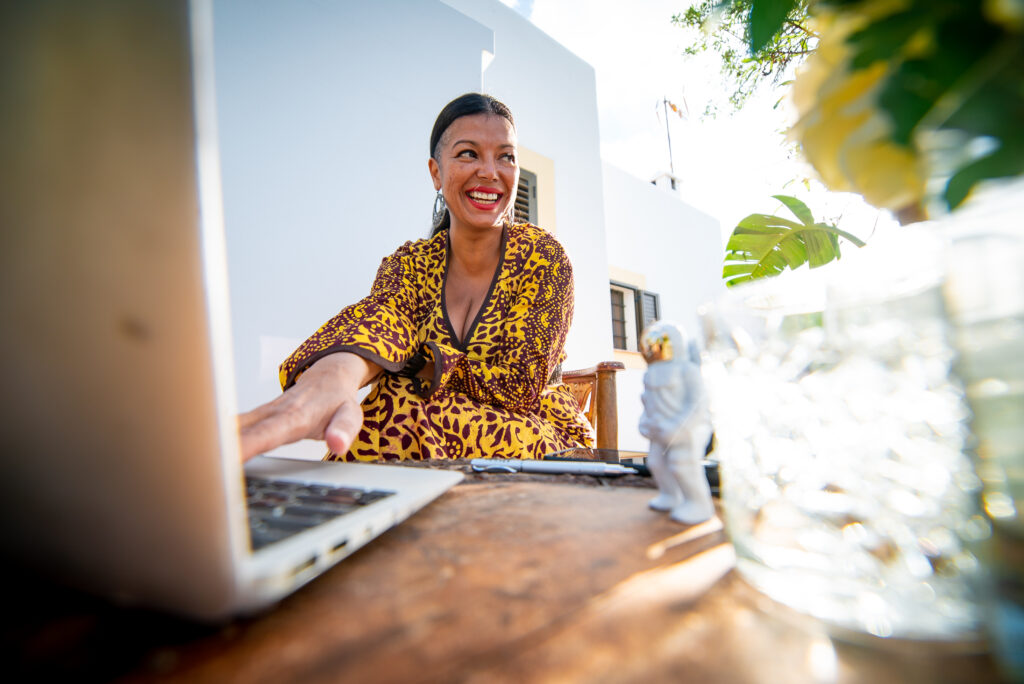
Sierra Campbell has spent almost 30 years working alongside people at the end of their lives. She began at sixteen and has since worked as a death doula, caregiver and educator, founding Choose Nurture and volunteering here in Ibiza with Ibiza y Formentera Contra el Cáncer. It is work that has given her an unusual perspective on what becomes important when time is limited, and on the role that relationships, storytelling and community play in helping us navigate loss.
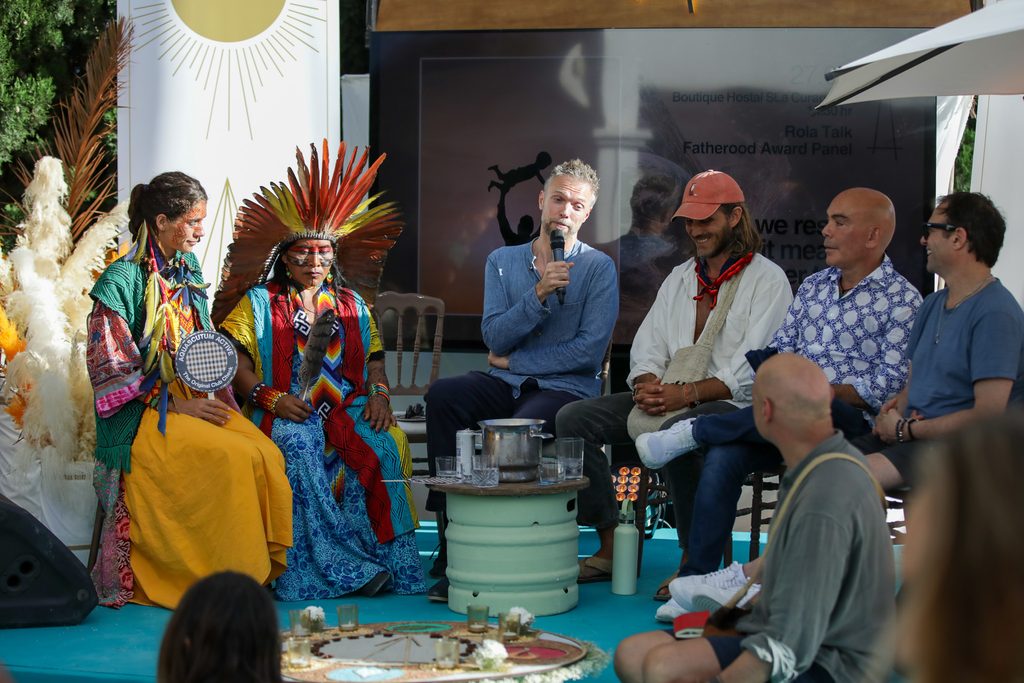
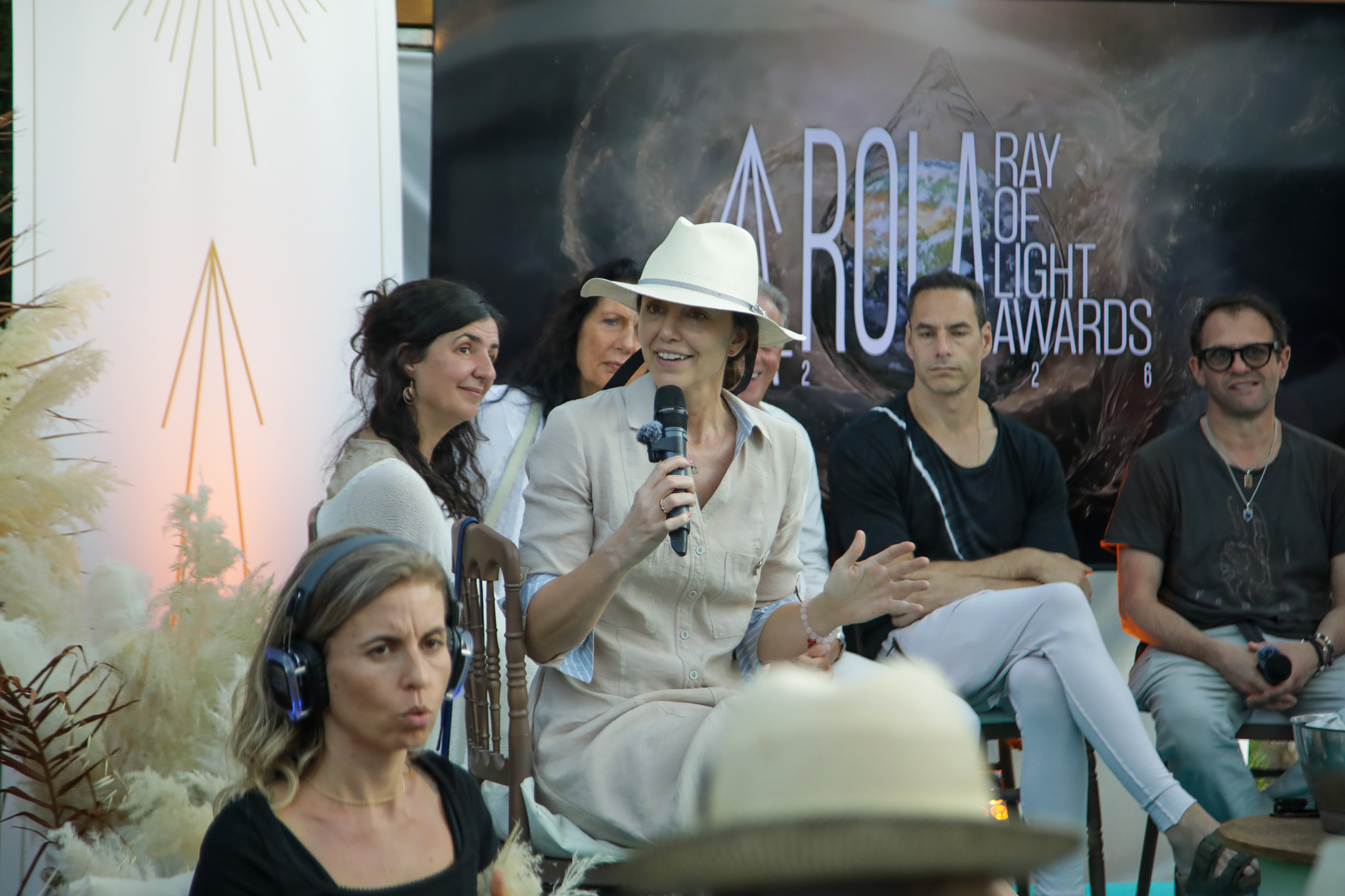
At ROLA 2026, Sierra joined the conversations around death and dying, a subject that sits particularly close to the origins of the festival itself. What interested her was not only the opportunity to speak about grief, but the way ROLA demonstrates something she has witnessed throughout her career: that loss can bring people together, and that the way we respond to it can continue creating meaning long after the event itself.
The Stories We Carry
Storytelling has been part of Sierra’s understanding of death since she first began working with older people as a teenager. She remembers listening to veterans, mothers, daughters and people from every walk of life recount experiences that would never find their way into a history book. Hearing those stories at such a young age changed the way she understood both ageing and the value of allowing somebody the time to make sense of what they have lived through.
The same process continues in her work today. When Sierra meets people towards the end of their lives, they often begin looking back at the stories they have told themselves about particular events, relationships and periods of difficulty. As some of the fear and emotional complexity surrounding those experiences begins to fall away, the meaning of a memory can change too. “Sometimes they’ll say, ‘Well, I’ve never thought of it this way. I’ve never told the story before. I never saw this.’” For Sierra, being heard can therefore become part of the process of making peace with a life. Without the opportunity to tell our stories, she believes we can remain caught within versions of our own histories that may no longer be entirely true.
What Our Elders Carry
This has also made Sierra deeply conscious of what is lost when generations become separated from one another. She has worked with hundreds of elders who have lived through war, migration, displacement and profound personal loss, and has seen how strongly many feel compelled to share those experiences with the generations coming behind them. “One of the greatest things that we’ve lost in modern society is the connection with generations. Storytelling cuts through that.” She describes the kind of gathering where people in their eighties and nineties share a space with young children as something society needs far more of, not simply at festivals but as part of everyday life. Knowledge moves differently when generations are allowed to know one another, and stories can carry an understanding of the consequences of war, displacement or suffering that is difficult to communicate in any other way.
Sierra believes there can also be something restorative in the telling itself. An experience that has remained painful for decades can take on another meaning when it becomes something from which another generation can learn. In this sense, storytelling does not simply preserve the past; it can influence what happens next.
Grief Needs Community
After three decades around death and dying, Sierra is clear that there is no correct way to grieve. She describes grief as a companion and as a natural response to loss, something human beings begin experiencing long before they encounter death itself. What she does believe strongly is that grief becomes harder when it is treated as an entirely private experience.
Looking towards cultures in which the wider community gathers when somebody dies, Sierra questions the modern tendency to give grieving people space by withdrawing from them. Somebody experiencing profound loss may have very little capacity to identify what they need, let alone ask other people to provide it. Her advice is therefore practical: rather than asking how you can help, offer something specific. Bring dinner on Tuesday, collect the children from school, or simply make it clear that you will be there. “This is a burden of weight that we were never meant to carry alone.”
For Sierra, normalising conversations around grief is part of rebuilding that support. Death does not become easier by being hidden behind closed doors, and communities cannot learn how to care for people through loss if the subject itself remains difficult to speak about.
Finding a Village in Ibiza
Sierra sees something of this community instinct in Ibiza, and it was one of the reasons she chose to make the island her home. She speaks warmly about its intergenerational character, where several generations can still be found together at markets, birthdays, gatherings and community events. Her work in end-of-life care made her particularly sensitive to the practical expressions of that closeness. When somebody becomes ill, people bring food; when an older person needs help getting to an appointment, somebody will offer to take them. These may appear to be small gestures, but Sierra sees them as evidence of a culture in which care remains part of the relationship between people.
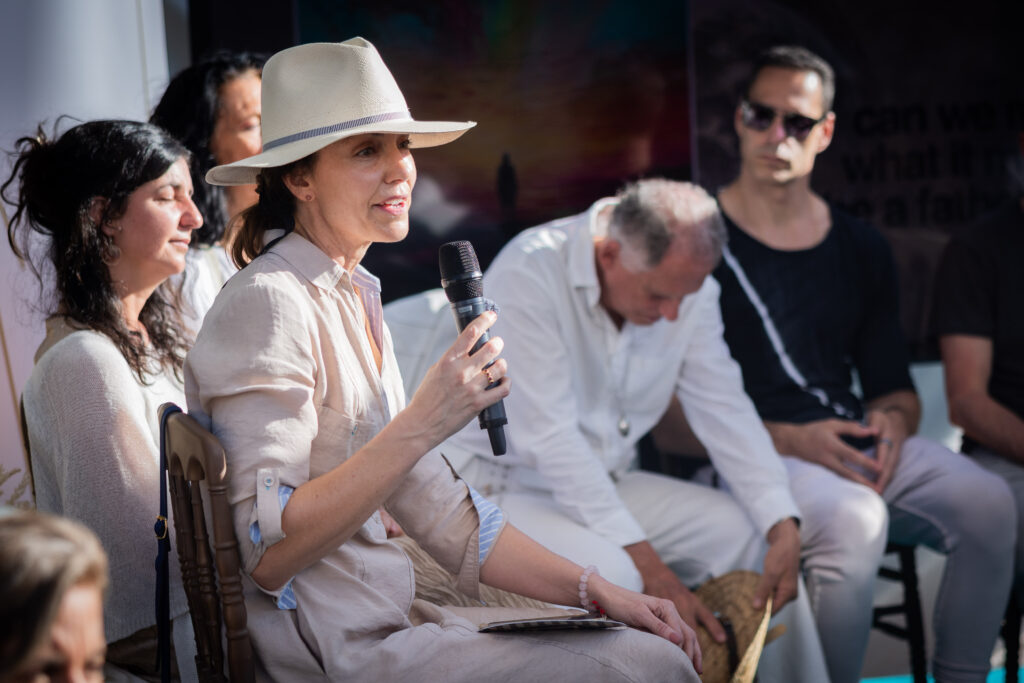
It is this sense of a village that she also recognised at ROLA. The festival brought together people of different ages, cultures and backgrounds around conversations that included some of the most difficult aspects of human experience, while allowing those conversations to happen within an atmosphere of celebration and connection.
Finding the Magic in the Tragic
Sierra describes her reason for coming to ROLA as wanting to find “the magic in the tragic”, an idea that has particular resonance within a festival created following the death of Ray Stevenson. She speaks with admiration about Elisabetta Caraccia and her family’s decision to allow something to grow from an immense loss, describing ROLA as one of the most beautiful examples she has encountered of grief being transformed through storytelling and community. Rather than containing Ray’s memory within the loss itself, she sees his influence continuing through the films being supported, the people meeting one another and the conversations that travel beyond the festival.
She uses the image of loss becoming “the compost of our soil of life”, not because suffering needs to be made positive, but because what follows a loss can still be nourishing and meaningful.
Art has an important place within this process. Sierra has seen how creativity can give form to emotions that are otherwise difficult to express, and she encourages people experiencing grief to consider what they might make from whatever they are feeling, whether through painting, sculpture, flowers or something much simpler. “Take your state of mind, especially in the moments of deep grief, and ask yourself, ‘What would an artist do?’” It reflects her wider belief that grief and joy do not need to exist as opposing states. Human beings are not designed to remain permanently within either, and creative expression can help us move through the complexity between them.
What Remains at the End
Of all the lessons Sierra has taken from working at the bedside of the dying, one of the simplest is also the one that has stayed with her most strongly. “What we have at the end of our life is our relationships. That’s it.” It is an observation that connects much of what she spoke about at ROLA: the importance of elders sharing their experiences, the need for community around grief, the value of bringing generations together and the role of storytelling in allowing one life to inform another.
Working so closely with death has not made Sierra’s perspective on life morbid. If anything, it has sharpened her understanding of where its value lies. The people she has accompanied towards death have shown her repeatedly that relationships acquire a different significance when much of what once occupied our attention begins to fall away.
Perhaps that is why she believes conversations about death should not be reserved for the moment when we are forced to have them. They can also help us think more carefully about how we want to live, how we care for one another and which relationships we choose to nurture while there is still time.