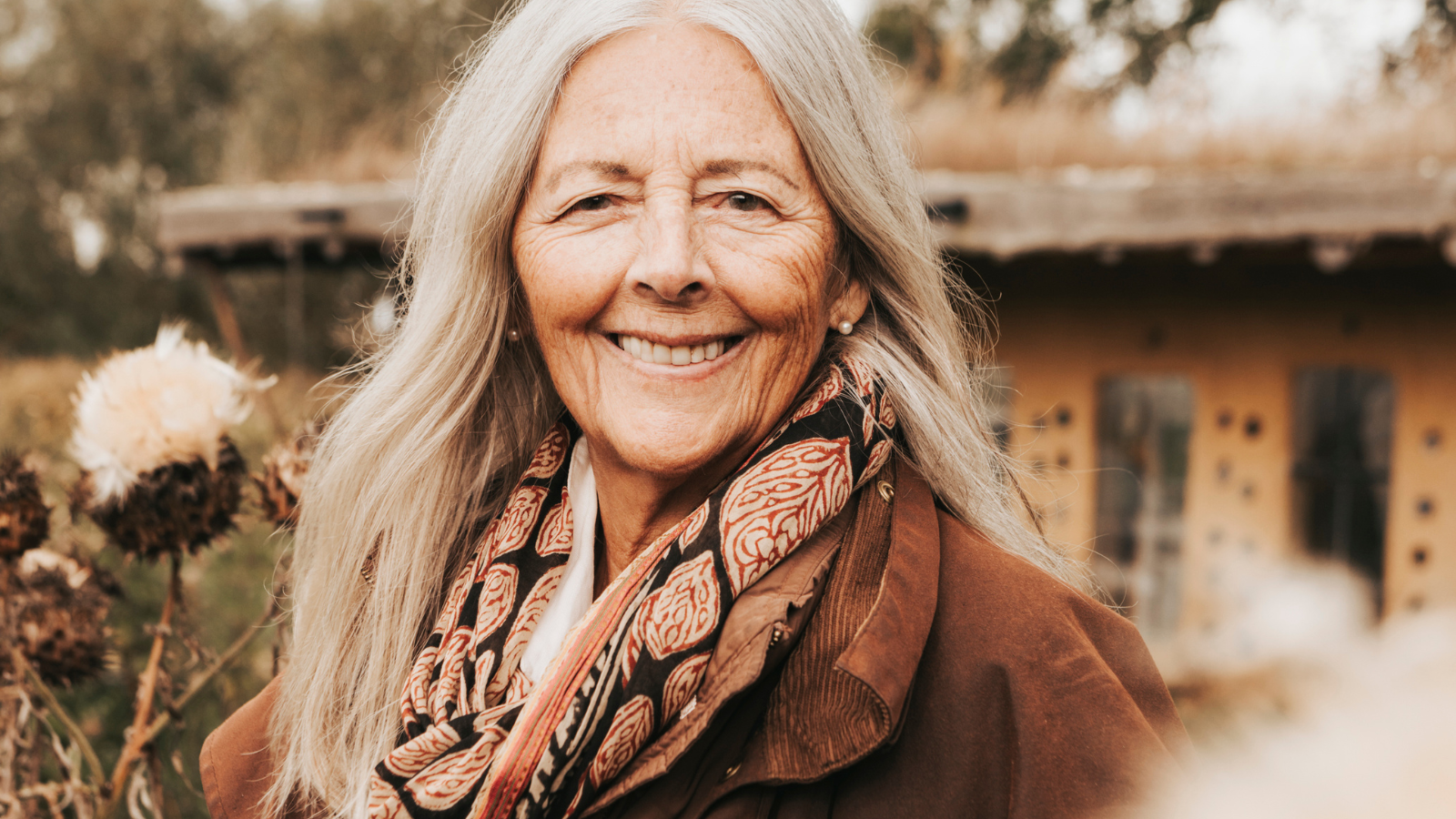
Helena Norberg-Hodge at Ray of Light Awards Ibiza.
Helena Norberg-Hodge, economist and founder of the localisation movement, returns to the Ray of Light Awards, bringing a critical perspective on globalisation and a renewed vision of community, culture, and ecological balance.
Why This Voice Matters Now
What if the future of our planet depends not only on innovation, but on remembering how to live differently?Helena Norberg-Hodge has spent decades exploring this question, and today, it feels more urgent than ever.Winner of major international recognitions, including the Right Livelihood Award (often referred to as the Alternative Nobel Prize) and the Goi Peace Prize, she has built a global movement around localisation, challenging dominant economic systems and proposing alternatives rooted in community, culture, and ecological balance.
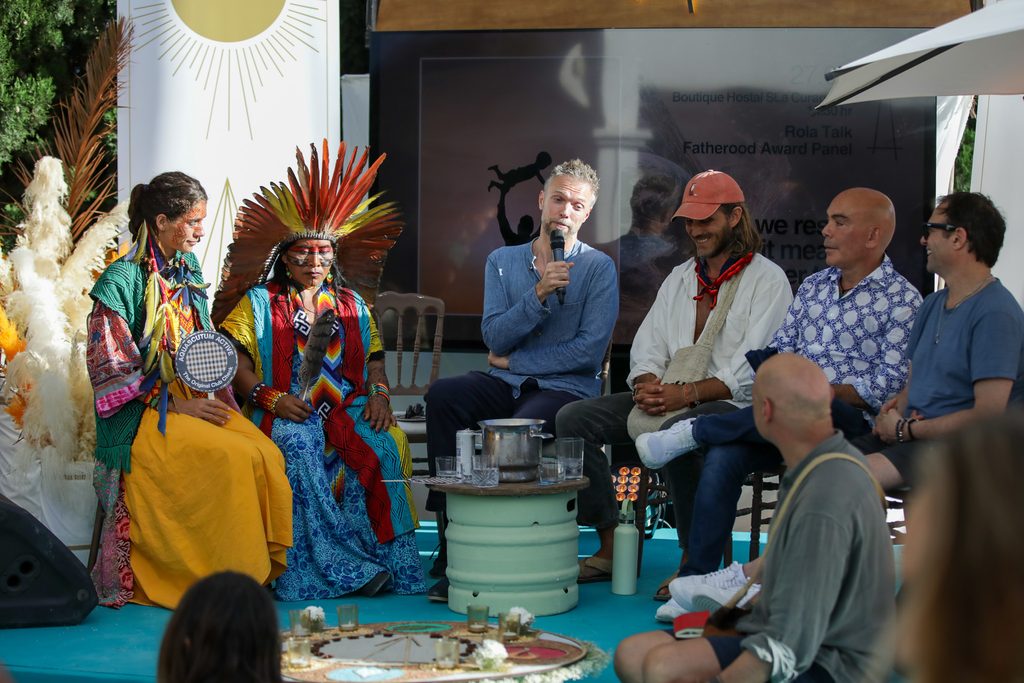
This year, she returns to the Ray of Light Awards in Ibiza, joining the Gaia Day panel Mother Earth, Mother Water — The Sacred Feminine Across Time. Her presence is not new, but part of an ongoing dialogue. Having already contributed to previous editions, her return reflects a continuity that sits at the heart of ROLA’s vision, bringing back voices that deepen and evolve the conversation over time.
Practice & Perspective
Helena Norberg-Hodge’s work is grounded in a clear and consistent observation: that the globalised economy, while often framed as progress, has come at a cost to both people and the planet.
Her early experience in Ladakh, in the Indian Himalayas, became a defining moment. There, she witnessed firsthand how a traditional, self-sufficient society began to transform rapidly under the pressures of modern development.
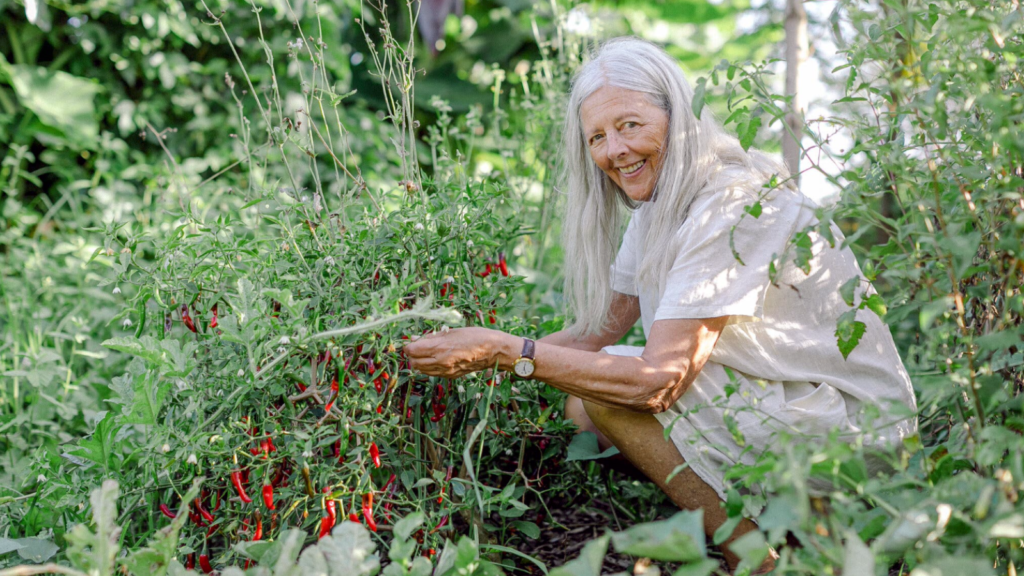
Helena Norberg-Hodge photograped by Lara Arnot for the New York Times
This experience led to her influential book Ancient Futures — translated into more than 50 languages — and the documentary The Economics of Happiness. Both works explore how economic systems shape not only material conditions, but also identity, relationships, and well-being. Through Local Futures and the International Alliance for Localization, she has worked globally to promote localisation as a practical path forward.
In her work, localisation does not mean isolation. It means rebuilding resilience — strengthening local economies, shortening supply chains, and restoring meaningful connections between people, culture, and the land. At its core, her perspective challenges a deeply ingrained assumption: that growth and scale are always indicators of success.
Deeper Alignment with ROLA
Her work aligns closely with the philosophy behind the Ray of Light Awards, particularly within the Gaia pillar. It reflects a principle long understood in many traditional cultures: that ecology, culture, and community are inseparable. This same idea is explored in the Gaia Day panel she joins this year — Mother Earth, Mother Water — The Sacred Feminine Across Time — a conversation that looks at the relationship between nature, care, and cultural memory across different traditions.
While many sustainability conversations focus on individual behaviour, Helena’s work expands the lens to include the systems that shape those behaviours — economic structures, cultural narratives, and global frameworks. For Ray of Light, this perspective strengthens the connection between storytelling, culture, and environmental awareness.
Relationship to Ray of Light
Helena Norberg-Hodge’s relationship with Ray of Light is built on continuity.
Her return to the festival, and to Gaia Day, reflects a shared commitment to developing conversations that evolve over time rather than existing as one-off moments.
As a returning voice within the Ray of Light Awards Ibiza, she contributes to a growing ecosystem of artists, thinkers, and cultural leaders exploring the intersection of creativity and responsibility.
Her presence adds depth, long-term perspective, and a strong alignment with the values that shape the festival.
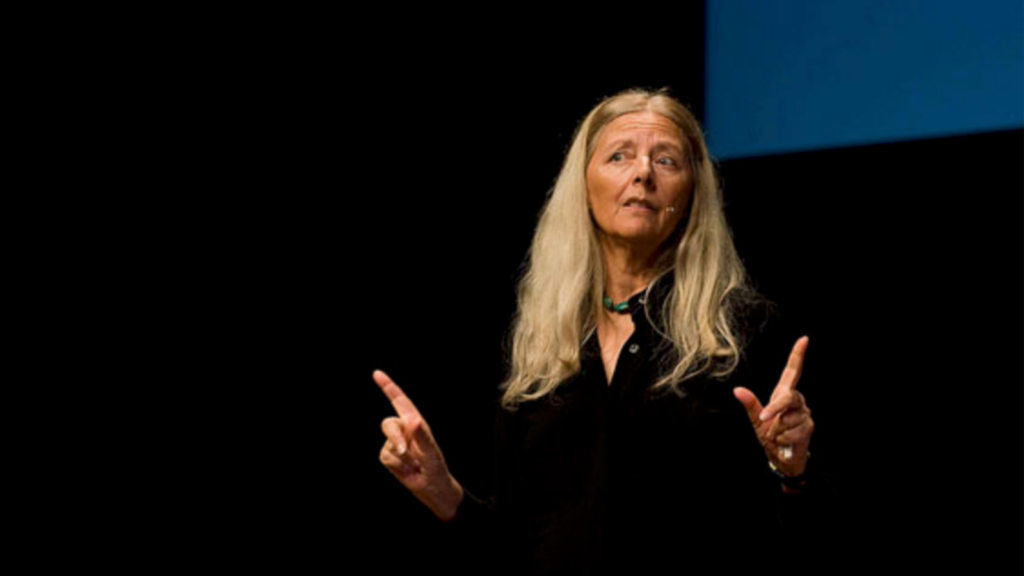
Photo by Diane van der Marel
A Wider Reflection
In a world defined by speed, scale, and global reach, Helena Norberg-Hodge’s work offers a different lens. One that asks whether progress should be measured not only by expansion, but by the quality of our relationships — with each other, with culture, and with the natural world.
Across many traditional societies, the principles she advocates — community, interdependence, and respect for nature — have always existed. Perhaps the challenge today is not to invent something entirely new, but to recognise what has been overlooked. And to ask:
What would it mean to rebuild from the local, outward?