Helena Norberg-Hodge has spent decades examining the impact of the global economy on cultures, communities and the natural world. An economist, author and founder of Local Futures, her work has taken her into around twenty cultures, from highly traditional communities to some of the most modernised societies in the world.
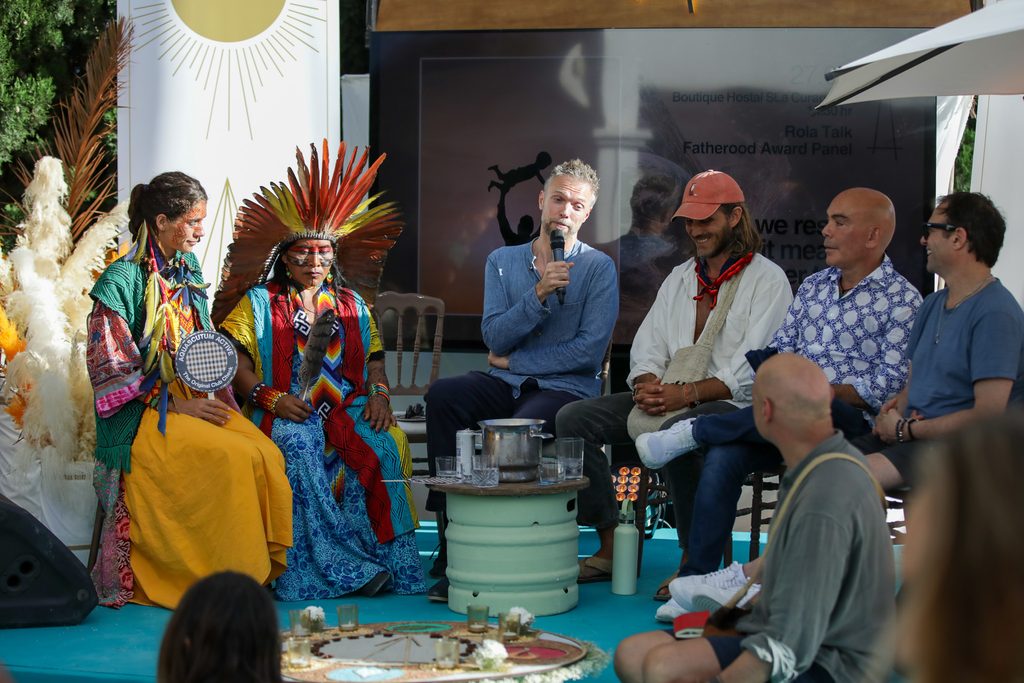
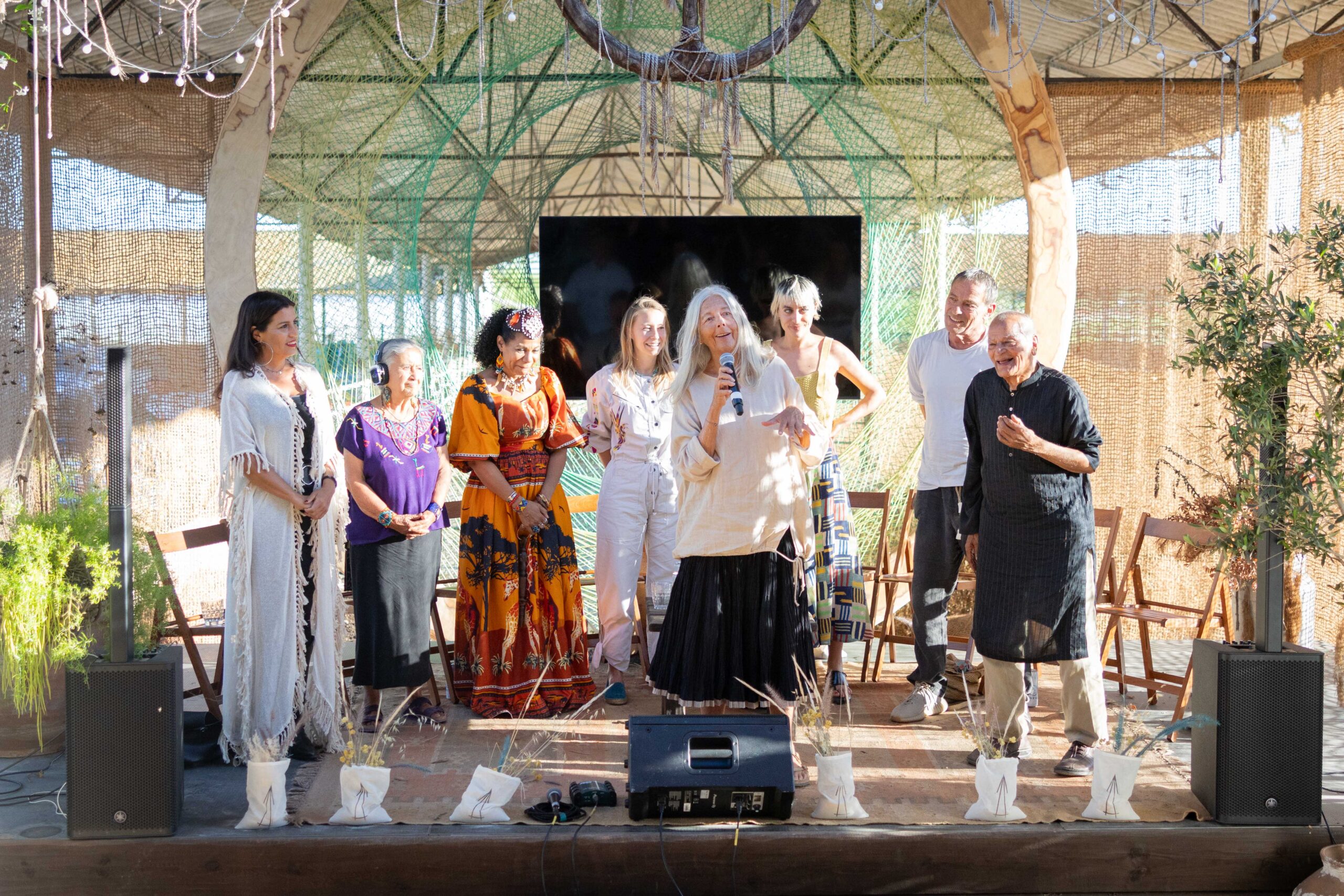
At the Ray of Light Awards Ibiza 2026, Helena spoke about what those experiences have taught her about the stories we are told, particularly around economic growth, progress and our individual responsibility for problems that are often far more systemic than we realise.
Her belief in the importance of storytelling is rooted in this experience. If the stories through which we understand the world do not reflect what is actually happening, she argues, it becomes very difficult to imagine how things might be different.
The Stories We Are Told
Working across different cultures allowed Helena to see the same patterns appearing in very different places. Young people were experiencing rising levels of depression, people were under increasing pressure to work more and communities were becoming poorer, while the prevailing story continued to be one of economic growth and progress. What concerned her was the tendency to treat these experiences in isolation. Depression, financial pressure or a deteriorating quality of life could easily be understood as something particular to an individual, their family, their culture or their government, without recognising that similar changes were taking place elsewhere.
“People were being told that it was their fault, that it was them as an individual.”
Seeing these patterns repeated across countries led Helena to question the larger economic system within which they were occurring, and particularly the assumption that a growing economy must necessarily mean greater prosperity for the people living within it.
What Do We Mean by Progress?
Much of Helena’s work challenges ideas that have become so familiar they can appear inevitable: that agriculture must become increasingly industrialised to feed a growing population, that people will continue moving towards larger cities, and that greater scale, technology and economic growth represent the natural direction of progress. Her experience has led her to a different conclusion. She points to smaller, more diverse farms as capable of producing more food per acre, and questions policies that continue to draw people away from the land and towards increasingly urbanised lives.
The consequences, as she sees them, extend well beyond economics. They affect health, the environment, our use of time and, crucially, our relationships with one another.
“The modern economy cuts like a knife through relationships.”
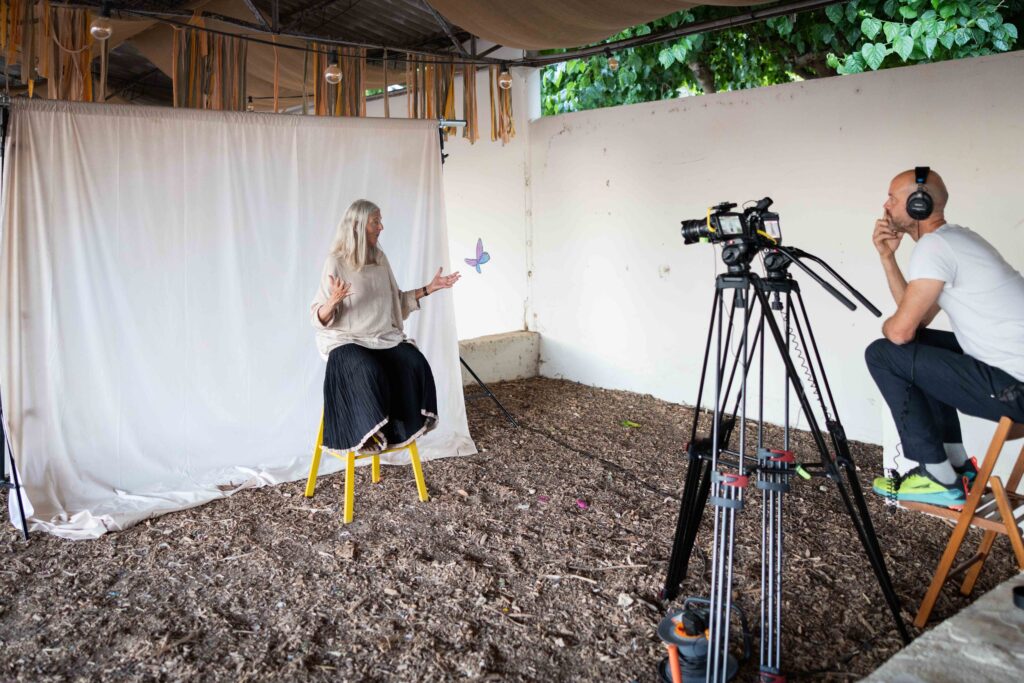
For Helena, looking honestly at those consequences allows us to ask a more useful question than whether the economy is growing: what kind of life is that growth actually creating?
Looking at the System, Not the Individual
Helena is equally clear that she does not see this as a story of good people and bad people. Many of those perpetuating the dominant economic narrative genuinely believe in it because, as she puts it, they have been “trained away from the big picture”. That distinction is central to her thinking. When problems such as poverty, depression, environmental degradation and increasing pressure on people’s time are considered separately, their shared causes can be difficult to see. Looking across cultures and systems makes those connections more visible.
It also changes the possibility of doing something about them. Rather than accepting these problems as an unavoidable consequence of human nature, population growth or modern life, Helena argues that we can recognise the role played by economic structures created by people. What has been constructed can also be reconsidered.
Why Storytelling Matters
This is why Helena places such importance on the stories we tell. “Stories and storytelling are really the most important activism right now.” Facts and research matter, but so does our ability to communicate the wider context in which they sit. Helena sees film as particularly powerful because it can help people understand connections that are often obscured when issues are presented separately. The stories she wants to see are those that correspond more closely with what is happening in the world: stories that allow us to understand why similar pressures are appearing across very different societies, while also showing that the direction of travel is not as inevitable as we may have been led to believe.
It is here that her work has a natural relationship with ROLA. The belief that storytelling can change the way we understand the world sits at the heart of the festival, particularly when those stories allow us to see familiar problems from a wider perspective.
Localising the Future
Helena’s response to globalisation has long been localisation: rebuilding economic activity at a scale that strengthens rather than weakens the relationships between people, communities and the places in which they live. She argues for more decentralised economies, diverse local food systems and a different relationship with technology, where it is used to support people rather than continually replace them. None of this requires rejecting modernity or attempting to recreate the past. It means examining which systems genuinely improve human and ecological wellbeing, rather than assuming that greater scale and greater economic activity will inevitably do so.
Her perspective at ROLA was ultimately an invitation to look more closely at the assumptions beneath the world we have built. Having spent decades observing similar changes taking place across very different cultures, Helena believes that understanding the bigger picture can also make the possibilities for change much clearer.
The first step is being willing to question whether the stories we have inherited about growth and progress still correspond with the lives we are actually living.