More than two decades ago, Martina Novatzki became severely ill and spent three months in a deep coma. When she woke, she had complete amnesia. She could no longer speak or walk, had no memory of who she had been and had to encounter life again from the beginning. One thing remained: her memory of the experience she had during those three months. It would profoundly shape the life that followed.
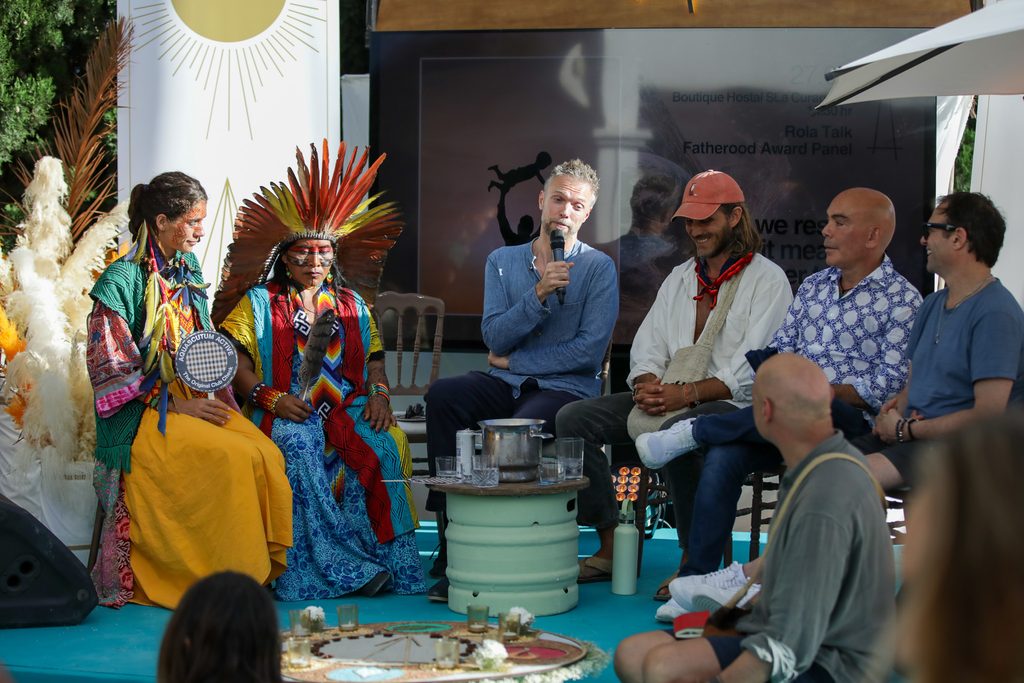
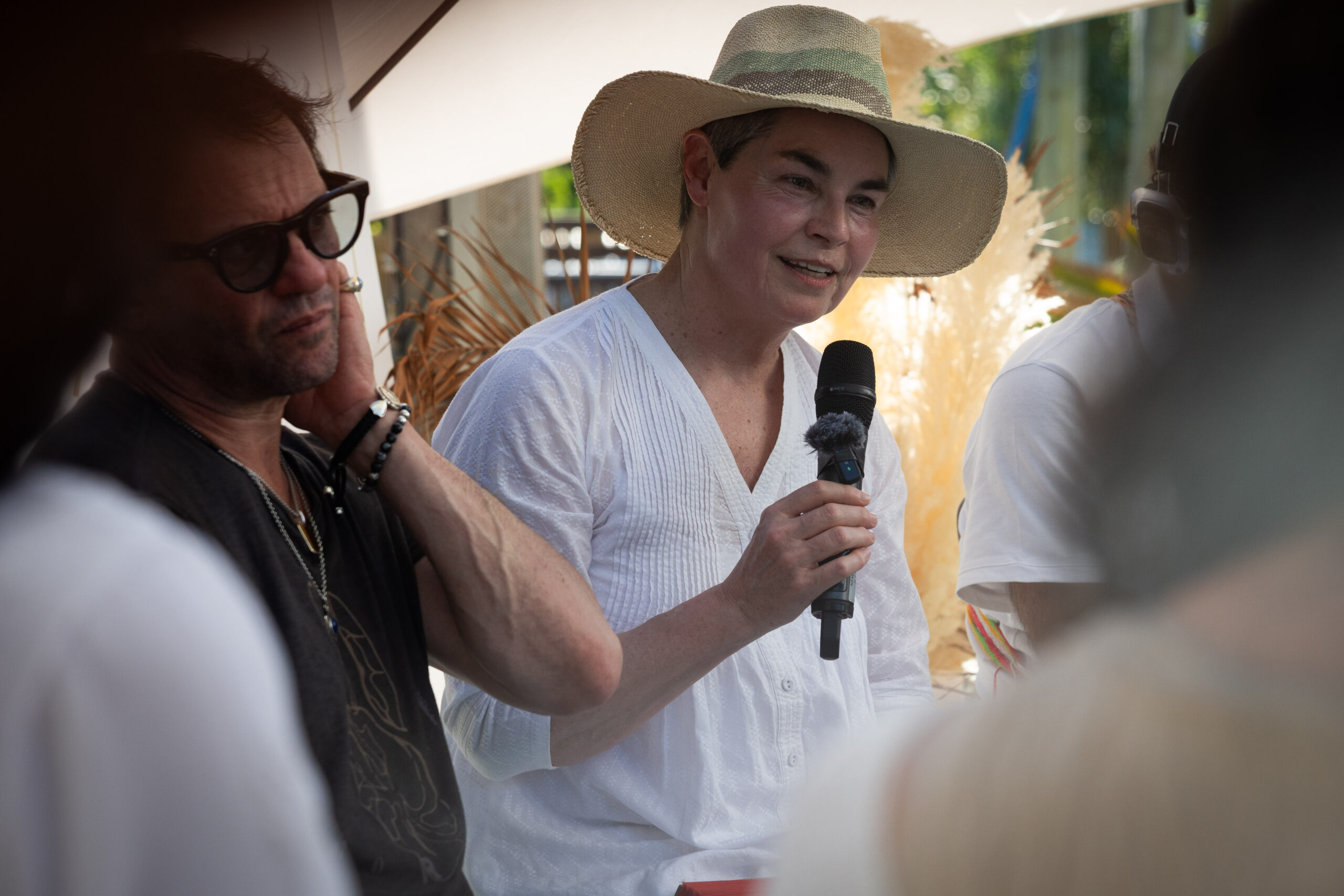
Martina joined ROLA 2026 for a panel exploring death and our relationship with it, bringing a perspective formed not through theory, but through an experience she still finds difficult to put into words. Since her recovery, she has dedicated much of her life to accompanying people through illness, vulnerability and moments of profound transition. She is careful about how she describes that work.
“I’m not a teacher. I like to call myself a companion on your path.”
Beginning Again
Waking from her coma did not mean returning to the life Martina had known. That life, in terms of her own memory of it, had disappeared. “I didn’t know anymore who I was. I couldn’t speak, I couldn’t walk, I couldn’t do anything, like a baby.” What followed was necessarily slow. She describes stepping back and moving quietly, little by little, as she began to understand the world and her place within it again.
Her experience during the coma became the one thread connecting what had happened to the person who emerged afterwards. Even today, she says she never regained the memories of her earlier life.
For Martina, this distinction matters when people describe what happened to her as a story. “It’s an experience. It’s not a story because the only memory I have is the memory of these three months of coma.” That experience eventually became the subject of a book, originally written in Spanish and now available in English, but it took her six years to write. The difficulty was not a reluctance to speak about what happened. She simply found that language was inadequate for something she had experienced so deeply.
An Experience Without a Persona
Near-death experiences have become increasingly visible in books, interviews, documentaries and conversations around consciousness. Martina has mixed feelings about that visibility.
She believes experiences of this kind can offer something meaningful to others, but worries when the individual begins to become more important than the experience itself. “What I miss a little bit is the lack of humbleness.” Her own response has been deliberately quiet. When she eventually wrote about what happened, she tried to keep the focus away from herself. “In my book I try also to focus on the experience, not on Martina.”
There is something important in that distinction. Martina does not deny that sharing a profound personal experience can help somebody else. Her own book, Volver Aqui, exists because she believes it can. What concerns her is the culture that can form around those experiences, particularly when people searching for answers encounter an overwhelming marketplace of teachers, gurus, retreats, seminars and competing promises. For someone already feeling lost, more information does not necessarily bring greater clarity. Sometimes, she believes, what is needed is considerably simpler.
Coming Back to Simplicity
Martina sees experiences that interrupt the ordinary course of life as an opportunity to reconsider where we look for meaning. “Everybody looks outside. We always try to find a solution outside.” Her concern is that the sheer volume of information now available can leave people further removed from themselves. The search becomes another source of noise, particularly at moments when somebody is vulnerable and trying to understand what has happened to them.
Her own experience took her in the opposite direction. “This process gives us a big opportunity to come back to simplicity, to regain a completely different connection to our inner side.” That return to simplicity has shaped the way she has lived ever since. Rather than attempting to build a public profile around what happened to her, Martina has spent the past 24 years working directly with people who need support.
A Companion on the Path
Martina works with people who are ill, struggling or standing at what she describes as a crossroads. She does not see her role as providing them with a prescribed answer. She accompanies them for a period of time. When they are ready to continue without her, her work with them is complete. Much of that process comes down to listening.
“When I accompany people in difficult life situations, something is created there. I can’t explain it.” That relationship allows trust to develop, and with trust, she says, people begin to open their hearts. “This is the point that everybody has to reach, reopen the heart, not get stuck in the mind.” There is no elaborate methodology attached to this. Martina describes herself as deeply down to earth. She listens to people, pays attention to what lies beneath what they are saying and gives them space to find their own way forward.
Her work has largely grown through personal recommendation. She is not on social media and does not give regular public talks. People find her because somebody she has accompanied tells somebody else. It is an unusually quiet model in a culture built around visibility, but perhaps that is precisely the point.
What We Carry Forward
Martina came to ROLA at the invitation of founder Elisabetta Caraccia, whom she first met in Ibiza in January 2025 while presenting her book. She had been invited to the festival previously but was unable to attend while spending several months working in India. In 2026, she was finally able to join the conversation. Her contribution offers a perspective on death that is ultimately concerned with how we live.
A profound experience changed Martina’s understanding of her own life, but she has never treated that experience as something that gives her authority over somebody else’s. Instead, it informs the way she sits beside people as they navigate their own difficult moments.
Perhaps this is why her description of herself as a companion feels so important. There is no promise to provide every answer. There is simply another person willing to listen, to remain present for a while, and to recognise when it is time for someone to continue along their own path.