Understanding our biological and emotional sensitivity to vibration.
Sound is not simply something we hear. It is something we feel, process, and embody.
From the rhythm of a heartbeat to the cadence of a voice, frequency shapes our internal world long before language forms meaning. Increasingly, both science and art are converging around a simple truth: vibration influences consciousness.
Therefore, when we speak about frequency psychology, we are not entering metaphor. We are entering biology.
In this evolving cultural moment, understanding why humans respond to sound is essential. Not only does it illuminate ancient traditions, but it also reveals why frequency-based art and sound healing science are expanding globally.
How Sound Influences the Nervous System
First and foremost, sound is physical. It travels as vibration through air, water, and tissue. Because the human body is primarily water, vibration moves through us with remarkable efficiency.
When we experience certain tones or rhythms, the nervous system responds almost immediately. For instance, low, steady frequencies can activate the parasympathetic nervous system, encouraging relaxation and safety. In contrast, sharp or irregular sounds can trigger alertness or even stress responses.
This is not coincidence. It is evolutionary design.
Moreover, the vagus nerve, which plays a crucial role in emotional regulation and resilience, is particularly sensitive to vocal tone. Consequently, the human voice carries more than words. It carries state.
This is precisely why vibration and emotion are inseparable. We do not merely interpret sound cognitively; we register it somatically.
Brainwave States and Sonic Triggers
In addition, sound has the capacity to entrain brainwave states.
Research into sound healing science demonstrates that repetitive rhythm and tonal frequencies can gently guide the brain from beta waves, associated with alert thinking, into alpha and theta states, which are linked to relaxation, creativity, and deep meditation.
As a result, sound becomes a bridge. It connects conscious thought with subconscious processing.

Throughout history, chanting, drumming, and harmonic resonance have been used intentionally to alter awareness. Today, neuroscientists are exploring what ancient cultures have long understood: frequency psychology operates at the intersection of physiology and spirit.
Cultural Roots of Sound as Medicine
However, this is not a new movement. It is a remembering.
Across continents and centuries, sound has been medicine. Indigenous cultures have used rhythm, song, and vibration to restore harmony within individuals and communities.
In our earlier exploration, Ancient Sounds, Modern Healing: What Indigenous Music Teaches Us, we examined how ceremonial music functions not as performance, but as restoration. Likewise, in The Rise of Sound Healing in Music: Why Frequency Matters, we explored why contemporary artists are returning to vibration as a core creative language.
Therefore, today’s global interest in sound healing is not a trend. It is a re-alignment.
Why Frequency-Based Art Is Growing Globally
At the same time, modern audiences are seeking experiences that go beyond spectacle. They are seeking coherence.
In a world saturated with visual stimulus and digital acceleration, sound offers something fundamentally different. It slows us down. It invites inward attention. It reorganises the nervous system.
Consequently, immersive, frequency-based art is expanding rapidly. Artists and technologists alike are exploring vibration as both aesthetic medium and healing tool.
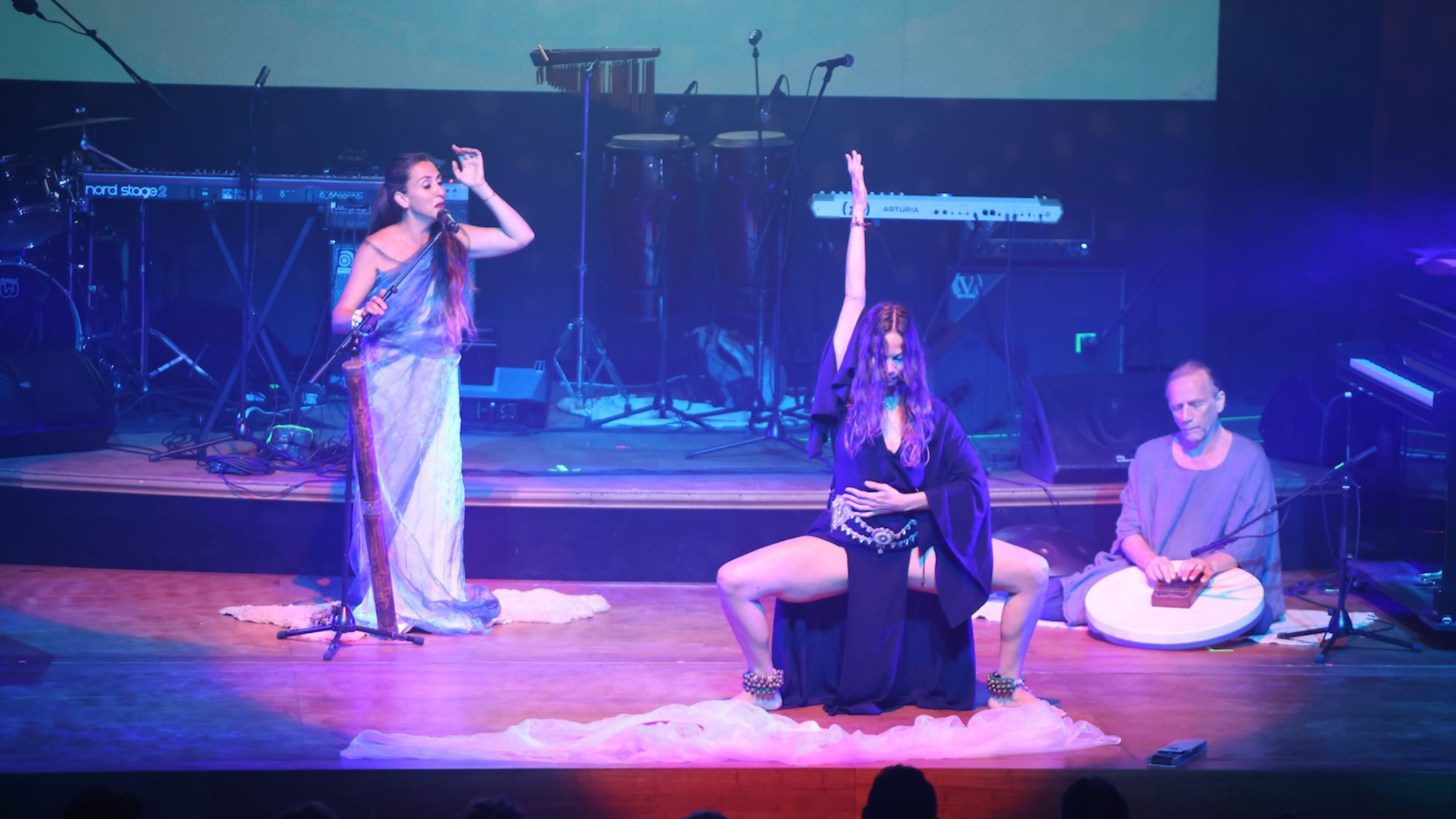
At the ROLA 2025 Gala at Teatro Pereyra in Ibiza, this convergence was palpable.
Romana Voz, a singer, educator, and voice luthier, reminded us that the voice itself is an instrument of transformation. Her work bridges bodily awareness and vocal technique, demonstrating that when we heal the voice, we heal the vibration. Through her performance, it became evident that sound is not separate from identity. It is an expression of it.
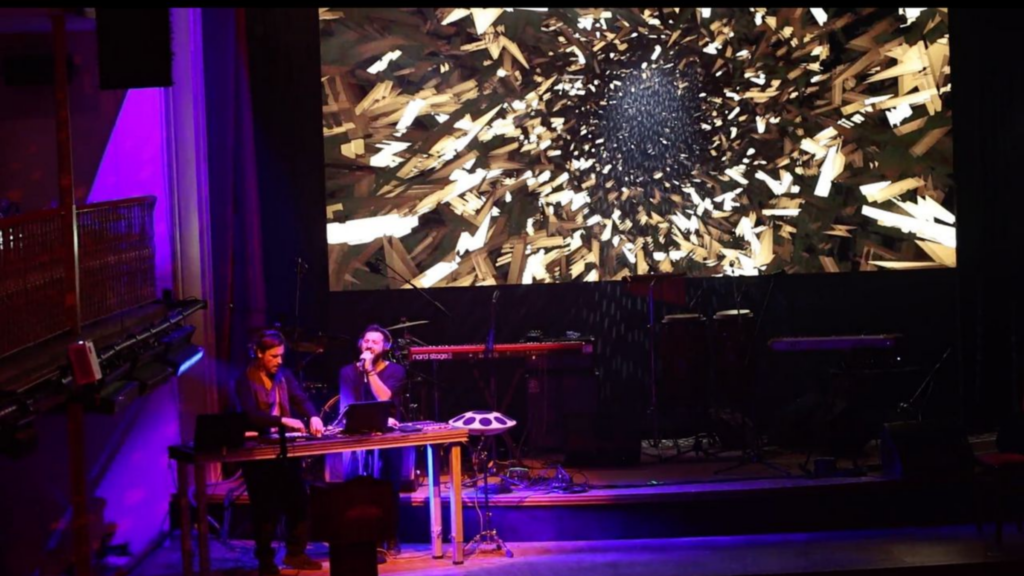
Similarly, Alma Digital, an immersive wellness art studio founded by multidisciplinary artists Vicente Manzano and Beltrán Lihn, presented a visionary fusion of audiovisual design, live music, and expanded consciousness technologies. Their work exemplifies how frequency psychology is now intersecting with XR, immersive storytelling, and digital art.
Together, these artists revealed something profound: sound is both ancient and future-facing.
ROLA’s Place in the High-Frequency Shift
So where does ROLA stand in this global shift? We stand at the threshold.
ROLA has always believed that art has the power to shift perception. Yet increasingly, we recognise that art also shifts state.
Frequency psychology, vibration and emotion, and sound healing science are no longer peripheral conversations. They are central to the cultural transformation unfolding worldwide.
Artists like Romana Voz remind us that when we heal the voice, we heal the vibration.
This is the change we stand for.
Transforming Ibiza into a high-frequency island of light, sound, and love.
Through film, music, and immersive collaboration, ROLA supports creators who understand that frequency is not merely aesthetic. It is ethical. It shapes how we relate to ourselves, to one another, and to place.
Therefore, as sound healing continues to rise, ROLA will continue to deepen its commitment to artists who explore vibration as a pathway to connection, coherence, and collective evolution.
Because when we change frequency, we change reality.